
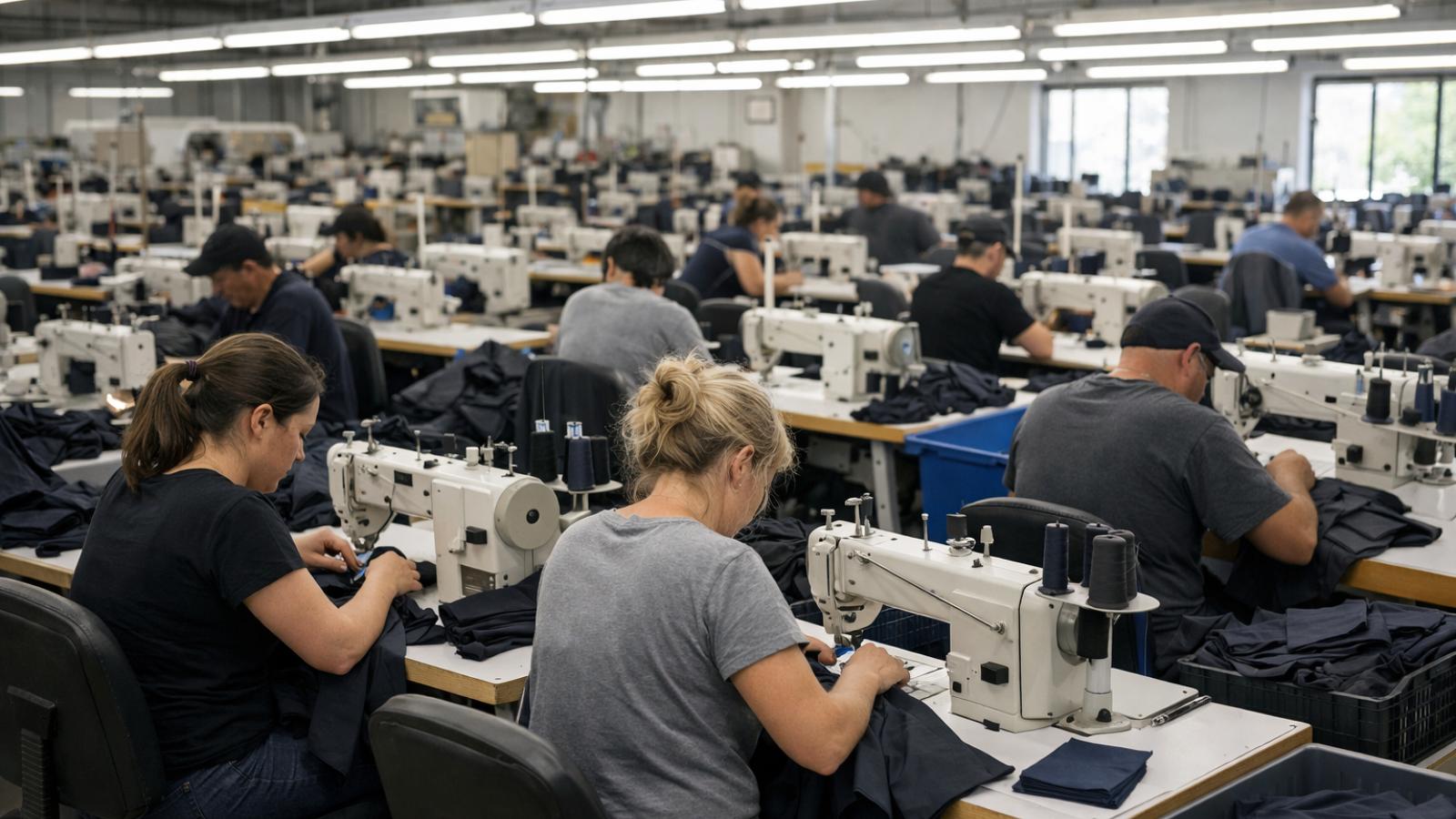
Quality in apparel manufacturing is not achieved at the inspection table.
It is built long before the first garment is sewn, through deliberate decisions in factory setup, process design, and operational discipline. When a factory is structured with clear traceability from product development to delivery, quality becomes predictable rather than accidental.
A well-designed apparel manufacturing system connects product development, sampling, cutting, sewing, and finishing into a single, coherent flow. Each stage has defined inputs, measurable outputs, and smart quality control points that prevent defects instead of detecting them late. When materials, processes, and responsibilities are aligned from the start, factories can consistently deliver high-quality products at scale.
This approach transforms quality from a separate control function into a built-in capability. It allows manufacturers to control variation, reduce rework, improve efficiency, and meet buyer expectations with confidence. When factory setup, process control, and quality management work as one system, top-tier product quality becomes the natural outcome.
All of these principles, from factory layout and production organization to lean production and integrated quality systems, are explored in detail in the book Manufacturing Excellence and Quality Management in Sustainable Fashion Apparel. The book breaks down how manufacturing decisions made early in the process directly shape product quality, operational performance, and long-term sustainability.
Factory setup as a quality system decision
Factory setup is often treated as a logistical or cost-driven decision, but in reality it is one of the most influential quality decisions in apparel manufacturing. The way production lines are arranged, materials are handled, and processes are sequenced directly determines how variation is introduced or controlled throughout the manufacturing flow.
When factory setup is planned with quality in mind, traceability becomes inherent to the system. From product development and sampling through cutting and sewing, each stage is designed with clear inputs, defined outputs, and responsibility ownership. This allows issues to be identified early, before defects propagate downstream and become costly to correct.
A quality-focused factory layout supports stable process flow. Material movement is minimized, work-in-progress is controlled, and handover points are clearly defined. Instead of relying on end-line inspection to catch defects, quality is embedded through logical sequencing, balanced workloads, and controlled interfaces between operations.
Most quality problems attributed to workmanship are, in fact, consequences of poor system design. Inadequate space allocation, unclear material routing, and disconnected production stages create pressure, shortcuts, and inconsistency. When factory setup is treated as a quality system rather than a physical arrangement, these risks can be anticipated and eliminated before production starts.
Common structural mistakes in apparel factories
Many apparel factories struggle with quality not because of a lack of procedures, but because of structural decisions made early and never revisited. These mistakes are often invisible once production starts, yet they continuously generate defects, delays, and inefficiencies.
One common issue is designing production lines around equipment availability rather than process logic. When machines are placed without considering operation sequence, material flow becomes fragmented. This increases handling, creates unnecessary waiting, and makes traceability difficult, especially when styles or volumes change.
Another frequent mistake is separating product development, sampling, and production teams too rigidly. When feedback from sampling does not directly influence production setup, known risks are repeated at scale. Critical information about construction details, tolerances, and material behavior is lost between stages, leading to avoidable quality issues during bulk production.
Overreliance on end-line inspection is also a structural weakness. Factories often compensate for poor setup by adding more inspectors instead of addressing root causes. This approach detects defects late, increases rework, and creates a false sense of control while underlying process instability remains unresolved.
Finally, insufficient space planning and unclear material routing introduce constant pressure on operators and supervisors. Congested work areas, mixed materials, and unclear responsibilities encourage shortcuts and inconsistency. These conditions make it difficult to sustain quality, regardless of how well written the quality procedures may be.
Quality control versus built-in quality capability
Quality control is often understood as inspection activity, but inspection alone does not create quality. It only identifies problems after they have already occurred. In apparel manufacturing, relying heavily on quality control at the end of the line is usually a sign that quality has not been adequately designed into the system.
Built-in quality capability starts earlier, at the level of process design and responsibility definition. Each operation is expected to produce output that meets requirements before passing work forward. Quality checkpoints are positioned at logical control points, where corrective action can be taken immediately, rather than after defects accumulate.
When quality capability is embedded into the production system, operators understand quality expectations, supervisors monitor process stability, and deviations are addressed at the source. This reduces dependency on inspection, lowers rework, and stabilizes output. Quality becomes part of normal production behavior rather than a separate corrective function.
In contrast, factories that depend primarily on inspection often experience recurring defects, inconsistent performance, and high operational stress. Inspectors may identify issues, but without structural changes to setup, workflow, and training, the same problems reappear. Sustainable quality improvement requires shifting focus from detecting defects to designing processes that prevent them.
Manufacturing systems and long-term sustainability
Sustainability in apparel manufacturing is often discussed in terms of materials and compliance, but its foundation lies in manufacturing systems. A factory that is poorly organized, unstable, and reactive will struggle to meet sustainability goals, regardless of certifications or policies.
When manufacturing systems are designed with stable processes, clear traceability, and controlled material flow, waste is reduced naturally. Rework, excess inventory, unnecessary transportation, and rushed production are all symptoms of weak system design. Addressing these issues at the setup level improves both quality performance and environmental outcomes.
Long-term sustainability is not achieved through isolated initiatives, but through manufacturing systems that consistently support quality, efficiency, and responsible use of resources. Factory setup decisions made early have lasting consequences, shaping not only product quality, but also the environmental footprint of apparel production over time.
Factory setup is not a background decision in apparel manufacturing. It defines how quality is built, how risks are managed, and how consistently products can be delivered over time. When production systems are designed with traceability, process stability, and responsibility in mind, quality becomes predictable rather than reactive. This systems-based approach allows apparel manufacturers to move beyond inspection-driven control and toward sustainable, repeatable performance across products, seasons, and markets.
Leave a Reply